How to Know If Your Wisdom Teeth Are Impacted in Oxnard CA
Wisdom teeth have a way of staying quiet until they do not. Many people assume that if the back of the mouth does not hurt, everything must be fine. That is not always how it works. Impacted wisdom teeth can sit under the gums for months or years, creating pressure, trapping bacteria, or crowding nearby teeth long before pain becomes obvious.
In a place like Oxnard, where people often juggle work, family schedules, school pickups, and beach traffic, dental symptoms tend to get pushed down the list until they become hard to ignore. I have seen that pattern often. A patient notices a little swelling near the jaw, an odd taste near the back molars, or soreness that comes and goes. They assume it is stress, sinus pressure, teeth grinding, or a random irritation from food. Then an X-ray tells the real story, a wisdom tooth is stuck, tilted, or only partly erupting.
Knowing whether your wisdom teeth may be impacted starts with understanding what “impacted” actually means, what symptoms deserve attention, and when an exam matters more than guesswork.
What an impacted wisdom tooth actually is
A wisdom tooth is called impacted when it cannot erupt into a normal position. Sometimes the tooth is blocked by bone. Sometimes it is trapped under gum tissue. In other cases, it starts to come in but runs into the tooth in front of it, which leaves it partially erupted and difficult to clean.
This matters because wisdom teeth are the last permanent teeth to develop, usually in the late teens to mid twenties. By then, the jaw may not have enough space left. Some people have room for all four wisdom teeth and never need treatment. Others have one or more teeth that come in sideways, remain buried, or break through only partway.
There are several patterns dentists commonly see. A tooth may angle forward into the second molar, which is one of the more frequent types of impaction. It may point straight up but remain trapped below the gumline because there is not enough room. It may lean backward toward the jaw. In rarer cases, it lies almost horizontally. The position matters because it affects symptoms, cleaning difficulty, risk to neighboring teeth, and the complexity of removal.
Why impacted wisdom teeth can be hard to spot on your own
The biggest challenge is that the signs are not always dramatic. People often expect intense pain, swollen cheeks, or a clear dental emergency. Real life is usually subtler at first.
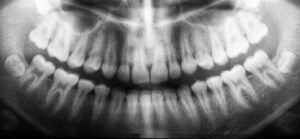
A partially impacted wisdom tooth can create a flap of gum tissue that traps food and bacteria. That can lead to tenderness or infection around the area. A fully impacted tooth may not cause noticeable symptoms at all for a while, but still put pressure on the surrounding structures or develop cyst related complications. Sometimes the only reason it gets discovered is a routine dental exam or panoramic X-ray.
This is one reason dentists do not rely on symptoms alone. The back of the mouth is hard to see, and even when you use a mirror, you are only getting a partial view. A tooth may appear absent when it is actually buried under the gums. It may look like it is coming in normally when the roots or crown are angled into the wrong place beneath the surface.
Common signs that raise suspicion
Certain symptoms come up again and again in people with impacted wisdom teeth. None of them proves impaction by itself, but the pattern can be revealing.
- Soreness or pressure at the very back of the mouth, especially behind the last visible molar
- Swollen, red, or tender gum tissue in that area
- Jaw stiffness or pain when opening wide, chewing, or waking up in the morning
- A bad taste, bad breath, or repeated irritation from food getting trapped in the same spot
- Headaches, ear-adjacent discomfort, or pain that seems to radiate even though the source is in the gums
Sometimes the discomfort comes in cycles. The gum swells for a few days, then settles down. That tends to happen when a partially erupted tooth causes inflammation around the tissue and bacteria collect under the gum flap. Patients often tell me, “It gets better, so I assume it’s nothing.” That temporary improvement can be misleading.
Pain is common, but pain is not required
One of the most important things to understand is that impacted wisdom teeth do not always hurt. A completely bony impaction can sit silently for a long time. The risk is not only immediate pain. It is also what may happen to the tooth next to it, the surrounding bone, or the gum tissue over time.
For example, a wisdom tooth that presses against the second molar can create a trap for plaque and bacteria where a toothbrush and floss have trouble reaching. I have seen patients come in because the wisdom tooth itself did not hurt, but the tooth in front of it had started to decay or develop gum problems. In that situation, the hidden wisdom tooth ends up causing damage in a place the patient assumed was healthy.
There are also cases where a patient blames pain on sinus congestion, clenching, or a sore throat. The upper and lower wisdom teeth sit far enough back that discomfort can feel vague. It can show up as jaw fatigue, tenderness near the hinge of the jaw, or a pressure sensation rather than a classic toothache.
What you may notice when you look in the mirror
A home check is not a diagnosis, but it can help you decide whether an exam should move higher on your priority list.
If you open wide and look behind your last molars, you may see a few clues. There could be swollen gum tissue over a tooth that seems only partly visible. You might notice that one side looks more inflamed than the other. In some mouths, just the top edge of the tooth peeks through the gum. In others, you see no tooth at all, but the area looks puffy or feels sore when touched.
Still, visibility is limited. Many impacted teeth are simply not visible in the mouth. And what you can see at the gum level does not tell you much about root formation, bone coverage, angle, or proximity to structures like the sinus or the main nerve in the lower jaw. That is why a proper dental exam and imaging are so valuable.
The symptoms people often dismiss
Patients rarely ignore severe swelling. What gets missed are the low-grade signs that blend into daily life.
A mild bad taste in the morning can come from bacteria collecting around a partially erupted tooth. Tenderness while chewing crunchy food on one side might reflect inflamed gum tissue. Repeated canker-like irritation in the very back of the mouth may actually be trauma from tissue sitting over an erupting tooth. Some people notice they have been chewing more on one side for weeks because the other side feels “off.” Others mention that flossing the back molar has started to hurt or bleed more than usual.
These details matter. Dentistry often works like detective work. A symptom that seems minor by itself becomes significant when paired with age, tooth position, and radiographic findings.
Why age matters, but does not tell the whole story
Wisdom teeth usually begin causing questions in the late teen years through the twenties, but there is variation. Some people do not develop all four. Some have them removed early because impaction is already obvious. Others reach their thirties or forties before a previously quiet tooth becomes a problem.
Younger patients generally heal more easily after extraction, especially before the roots are fully developed and before the bone becomes denser with age. That does not mean everyone should automatically have wisdom teeth removed. It means that timing is part of the discussion. If a dentist sees early signs that a tooth is impacted and likely to create trouble later, there can be an advantage to addressing it before repeated infection or damage occurs.
On the other hand, not every wisdom tooth that looks crowded must come out immediately. A dentist weighs several factors, including symptoms, hygiene access, X-ray findings, the angle of the tooth, and whether the surrounding tissue is stable.
Infection around a partially erupted wisdom tooth
One of the more common complications is an infection of the gum tissue around a partially erupted tooth, often called pericoronitis. This tends to happen when the tooth breaks through the gum only partway, leaving a flap of tissue that bacteria love.
The early signs can be easy to miss. The gum may feel sore and swollen for a day or two. Then it becomes painful to chew. Some patients notice a foul taste or odor. In more advanced cases, swelling can spread, and opening the mouth becomes uncomfortable. Occasionally there is referred pain toward the ear or throat.
This is not something to leave alone if the swelling is significant or if you have fever, trouble swallowing, or difficulty opening your mouth normally. Those are signs that deserve prompt professional care.
Crowding, shifting, and the debate people hear about
Many people have heard that wisdom teeth “cause crowding.” This is one of those topics where nuance matters. Wisdom teeth can contribute pressure in the back of the mouth, but they are not the only reason teeth shift over time. Natural age-related changes, bite forces, and prior orthodontic patterns also play a role.
What is clearer is that impacted or partially erupted wisdom teeth can create localized problems, especially around the second molars. Even if the front teeth do not visibly move, the area in the back can become harder to keep clean, more vulnerable to decay, or chronically inflamed.
So if you are asking whether wisdom teeth are to blame for every bit of shifting, the answer is not always. If you are asking whether impacted wisdom teeth can still be problematic even without obvious crowding, the answer is absolutely yes.
What a dentist in Oxnard will check
A proper evaluation is more than a quick glance. During an exam, the dentist looks at the gum tissue, checks how much of the tooth has erupted, evaluates tenderness, and looks for signs of trapped debris, infection, or damage to nearby teeth. X-rays, often panoramic images, are what show the real position of the wisdom teeth.
That imaging helps answer practical questions. Is the tooth fully impacted or partially erupted? Is it pressing into the second molar? How close are the roots to the lower jaw nerve? Are the upper wisdom teeth near the sinus floor? Is there decay, bone loss, or a cyst-like area around the tooth?
These are the details that shape treatment recommendations. They also explain why two friends can both be told they need wisdom teeth looked at, yet end up with very different plans.
When it is time to schedule an evaluation
Some situations call for a visit sooner rather than later. If any of these sound familiar, it is worth getting checked.
- Repeated swelling or soreness behind your back molars
- Pain that returns every few weeks in the same area
- Trouble cleaning the far back tooth because gum tissue covers part of it
- Food trapping, bleeding, or a bad taste near the wisdom tooth area
- A dentist has mentioned impacted teeth before, but you never followed up
People searching for Wisdom Teeth Removal Oxnard CA often start there because symptoms have become disruptive. That search makes sense, but the step before removal is diagnosis. Not every sore spot means extraction, and not every extraction is urgent. An exam tells you which category you are in.
Cases where there are no symptoms at all
It can feel strange to hear that a tooth may need monitoring or removal when it is not hurting. Yet this is common with wisdom teeth. The absence of pain is not proof of health.
An impacted tooth can sit in a position that threatens the neighboring molar by creating a plaque trap where decay starts below the gumline. It can also be associated, in less common cases, with changes in the surrounding sac or bone. Even a fully covered tooth can become part of a risk calculation if the angle and location make future problems likely.
This is where professional judgment matters. Some asymptomatic impacted teeth are simply monitored with periodic exams and X-rays. Others are better addressed before they create damage that is harder to treat later. The right call depends on the whole picture, not a one-size-fits-all rule.
What removal planning usually involves
If the tooth is impacted and likely to cause trouble, the next conversation is about removal. The complexity can range widely. A wisdom tooth that has erupted enough to grasp and is not deeply embedded may be relatively straightforward. A tooth trapped in bone, angled awkwardly, or located close to the lower nerve may require a more involved surgical approach.
Patients often worry most about the procedure itself, but the planning stage is where the quality of care really shows. A good clinician explains the position of the teeth, the reason removal is advised, the expected difficulty, and the recovery trade-offs. In some cases all four wisdom teeth come out at once. In others, only the problematic teeth are treated.
The decision can also be shaped by timing. College breaks, work schedules, athletic commitments, and childcare realities all matter. In practice, treatment succeeds best when the medical details and the life details are both respected.
Recovery concerns people ask about most
Most adults asking about impacted wisdom teeth want the same practical answers. How bad will recovery be? How many days off work will I need? Will I be swollen? What can I eat? Those concerns are valid, especially for people who cannot easily pause their routine.
Recovery varies depending on the difficulty of the extraction, the number of teeth removed, age, and personal healing patterns. Many people plan for a few quieter days, soft foods, and some swelling. If the teeth are deeply impacted, recovery can be more noticeable. If the procedure is simpler, some patients are surprised by how manageable it feels after the first day or two.
What matters before recovery begins is getting the right diagnosis first. If a tooth is inflamed, infected, or damaging nearby structures, waiting too long rarely makes life easier.
Why local evaluation matters in Oxnard
Oxnard patients often have the same concerns as patients everywhere, but local care still matters. A provider who routinely handles wisdom tooth evaluations in the area understands the pace of life here, common scheduling pressures, and the importance of clear follow-up planning. Access matters too. When swelling or infection starts, being able to get seen without a long delay can make a big difference.
If you are searching online for Wisdom Teeth Removal Oxnard CA, look for a practice that starts with careful evaluation rather than assumptions. Good care is not just about taking teeth out. It is about determining whether the teeth are truly impacted, whether they are causing current or future harm, and whether the timing and approach make sense for you.
The bottom line signs to take seriously
If you remember only a few things, remember these. Recurrent soreness in the far back of the mouth, swelling around partially erupted teeth, bad taste or food trapping near the last molar, and jaw discomfort that keeps returning are all reasons to get checked. If your dentist has already told you your wisdom teeth are impacted, do not assume that silence means safety forever.
The clearest way to know whether wisdom teeth are impacted is not by guessing from symptoms alone. It is through an exam and X-ray that reveal what is happening below the surface. Sometimes the answer is simple monitoring. Sometimes the answer is prompt treatment. Either way, you are better off with real information than with another six months of hoping the back of your mouth settles down on its own.
If something feels off in that area, trust that instinct. Wisdom teeth are small structures in a https://archeroclu472.brightsora.com/posts/what-parents-should-know-about-wisdom-teeth-removal-in-oxnard-ca difficult location, but they can create outsized problems when they do not have room to grow. A timely evaluation can spare you pain, protect the tooth in front of them, and help you make a clear decision before a minor irritation turns into a bigger dental problem.
Oxnard Dentistry
1730 E Gonzales Rd
Oxnard, CA 93036, United States
Phone: +1 805-307-8731
FAQ About Wisdom Teeth Removal Oxnard CA
How much does it cost to get wisdom teeth removed in California?
Fees depend on tooth position, the number of extractions, imaging and anesthesia. Oxnard Dentistry can provide an individual estimate after examining your teeth. Ask for an itemized plan and confirm insurance benefits before scheduling.
Will insurance cover wisdom teeth removal?
Coverage and out-of-pocket costs vary by policy and the treatment required. Ask the dental office and your insurer to verify benefits, annual limits and any authorization requirements. A benefit estimate does not guarantee payment.
Is 30 too old to have wisdom teeth removed?
Age alone does not determine whether extraction is appropriate. A dentist evaluates symptoms, tooth position, oral health and medical history. Healthy, functional wisdom teeth may be monitored; teeth causing disease or other problems may need treatment.